The MVP: A ModernVivo Podcast
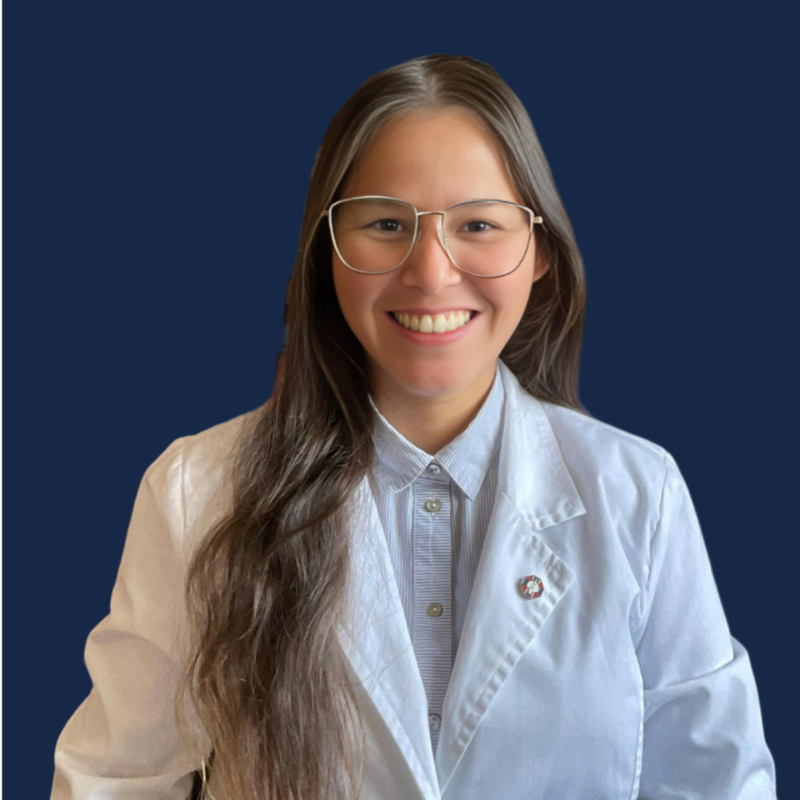
Season 1, Episode 2 Show Notes: Daniela Rauseo MD, PhD
An interview with Daniela Rauseo MD, PhD to discuss her findings on the complex role lactate plays in regulating the mitochondrial environment.
In this first-ever guest feature on The MVP, I sat down with Dr. Daniela Rauseo to discuss her research on mitochondrial lactate vents, published in the Cell Metabolism journal in March of 2026. In this blog post you can read more about her findings and career journey. A PDF of her publication is available here to read and download. You can connect with Dr. Rauseo on LinkedIn if you’d like to discuss her work further.
Listen on Spotify, Apple Podcasts, or Youtube.
To inquire how to be a guest on the podcast, please contact andres@modernvivo.com.
Introducing new information to the debate on the so-called “intracellular lactate shuttle.”
Dr. Rauseo and her team used genetically encoded lactate and redox sensors to identify a lactate pool within the mitochondrial matrix. Using these tools, they were able to observe and calibrate lactate levels inside mitochondria in real time, both in living cells and in the brains of living animals. They also identified lactylation in enzymes belonging to the TCA cycle.
During the early stages of this work, Dr. Rauseo developed a new method called MiRE, which was used to test the direct oxidation of lactate in mitochondria, as described in the paper.
For decades, researchers have claimed that lactate can enter mitochondria and be directly burned as fuel. But her paper tells a different story. While lactate does cross the inner mitochondrial membrane through a saturable pathway sensitive to pharmacologic and genetic inhibition of the mitochondrial pyruvate carrier (MPC), it does not measurably energize the electron transport chain under the conditions tested. In fact, the opposite happens – mitochondria make and release lactate rather than consuming it for energy.
Perhaps the most novel finding was that blocking the MPC causes matrix lactate and H₂O₂ accumulation, revealing a rapid lactate-based "vent" that modulates matrix energy and reactive oxygen species. In other words, lactate movement functions as a pressure-release valve when the mitochondrial environment becomes over-reduced (i.e. stressed), converting pyruvate to lactate and exporting it to clear dangerous reactive oxygen species.
As she mentions in the interview, Dr. Rauseo’s work has real implications for understanding brain energy metabolism, neurological disease, cancer metabolism, and other metabolic disorders. In all of these contexts, lactate dynamics and oxidative stress are central.
“What should I expect? I don’t know. But the experiment is going to tell me. I believed that I was going to find something. Something nobody has seen. Ever.”
In our discussion, Dr. Rauseo talked about the value of belief, resilience, discipline, and perseverance in achieving her goals. She made it clear that scientific discovery is a function of bold curiosity, an ability to face the unknown and uncover new information by thoughtfully designed experiments.
She also emphasized the importance of sharing her work with people who had different opinions or viewpoints about the research. Her skeptics forced her to understand her work on a deeper level and become curious about the ways in which she could improve her scientific approach.
Dr. Rauseo noted the importance of a growth mindset and accepting that growth requires you to change and modify your perspectives when faced with new information. She also believes that the ways in which you change should always be tied to deeper personal values, like respect, honesty, kindness, and organization. As she says, it’s critical to gain clarity about your inner values because they direct your workplace ethics.
To all those who may feel stuck in their research journey, Dr. Rauseo shared this message:
“Keep going. Things that have real value are not easy. You can do it. You have to believe in what you’re doing, even if no one believes in you. If you’re ambitious, you have to connect with ambitious people also.”
“I’m in a transition. I have faith that I will find a place that will give me the opportunity to develop as a researcher and MD.”
Dr. Rauseo has a desire to continue her career in Europe, or beyond. She made it clear that serendipity will be a part of her unfolding journey, and that she believes that there is a place in this world and life where she can shine as a human, as a scientist.
She’s open to new connections and conversations with other life scientists who may be interested in metabolic biochemistry and metabolic disorders. Reach out to her on LinkedIn to connect.
ModernVivo designs best-in-class literature review software to help preclinical scientists identify insights from millions of peer-reviewed papers to design their in vivo studies faster.
Anyone can sign up and start using ModernVivo for free. Whether you’re an academic, a biopharma scientist, or a contract research organization, our tool can help you save countless hours on manual literature review, without sacrificing scientific rigor.
To learn more about how ModernVivo works, check out these demos. Reach out to andres@modernvivo.com if you’d like to discuss how we can support your research needs.